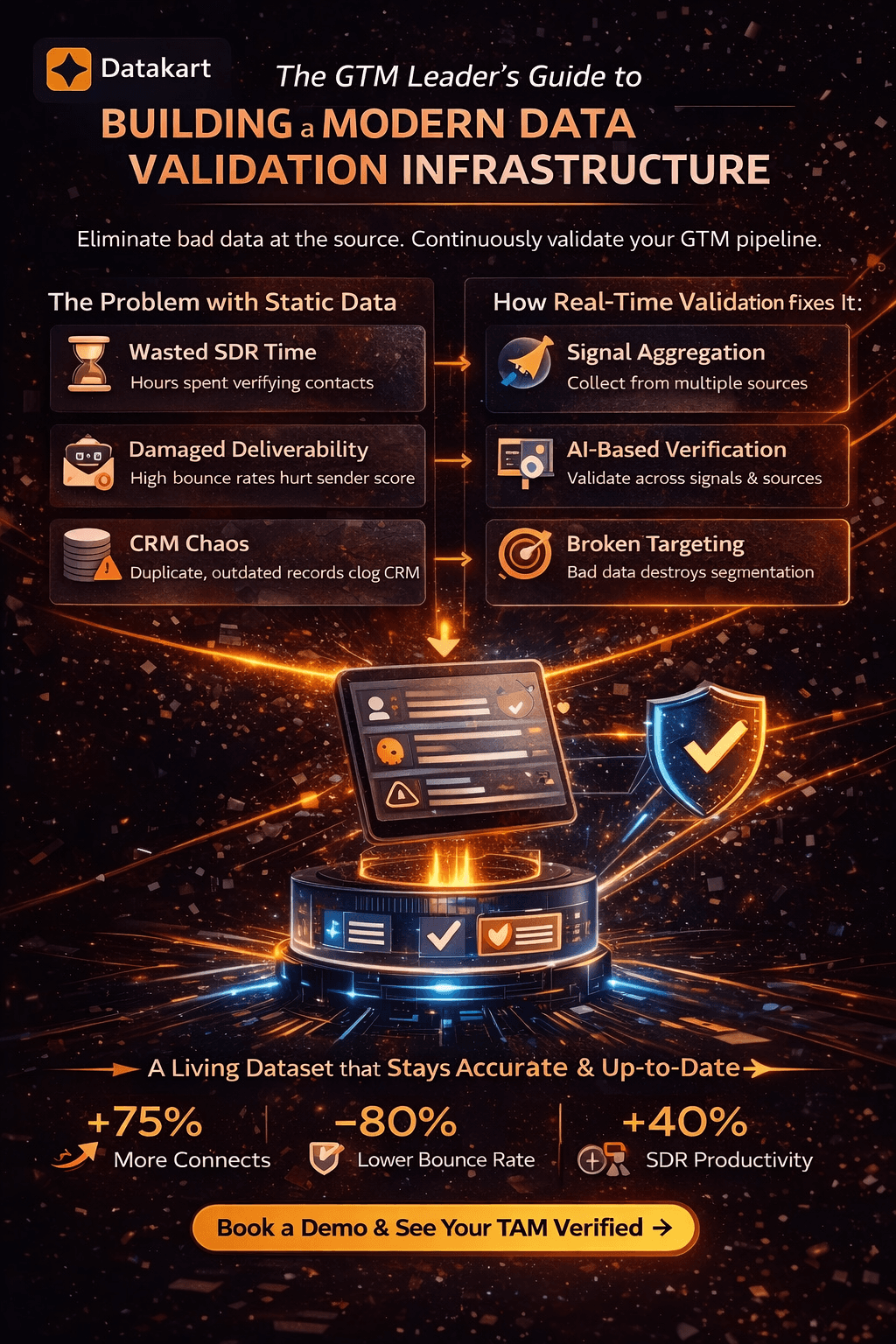
The GTM Leader's Guide to Building a Modern Data Validation Infrastructure
Build a robust data validation infrastructure. Learn to implement real-time verification logic for email and phone checks to fuel your revenue engine.
 March 28th, 2026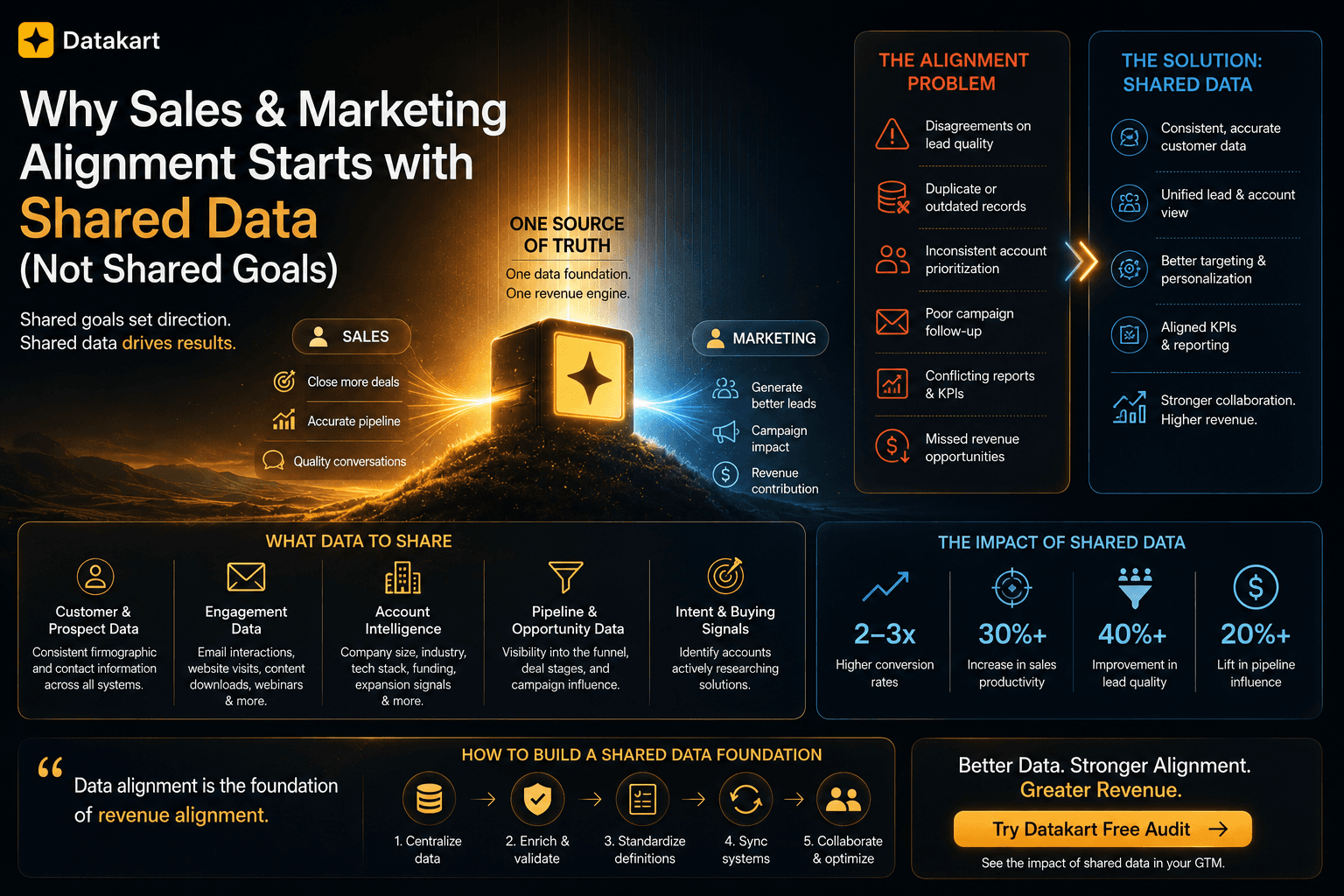
Sales and marketing teams in today’s times make use of multiple tools to make their operations efficient when it comes to database management. Yet there are several organizations that struggle with quality of data, unsuccessful, poor results when it comes to sales outreach or sending marketing campaigns to the right target audience.
Sales and marketing alignment is very important when it comes to business. And this is checked by defining common revenue targets, shared KPIs, and collaborative planning sessions. These initiatives are taken by many businesses, yet there is a struggle seen with friction between teams. This is primarily because of poor quality data and not the goals defined to meet.
Sales and marketing teams must be aligned on targets, pipeline numbers, and growth objectives for overall success of the organization. However, if each team operates on a variety of datasets, uses different definitions, or views customers through separate lenses, there can be significant misalignment. With continuous growth in purchasing power, businesses have understood the importance of data foundation for collaboration and revenue growth.
Most businesses suffer from inconsistent information. Marketing teams may identify a lead as qualified based on engagement activity, while sales may dismiss the same lead if company data is incomplete or outdated. Similarly, the marketing team reports campaign success based on lead volume, while the sales team evaluates success by means of pipeline contribution. With this disconnect, one can see significant sales marketing misalignment issues as follows:
Disagreements on lead quality
Presence of duplicate or outdated records
Inconsistent account prioritization
Poor campaign follow-up
Reports of conflicting performance
Missed revenue opportunities
With the growth of organizations, these alignment issues only increase with use of multiple tools, fragmented systems, and disconnected workflows.
Revenue targets are shared across teams and often certain B2B revenue alignment is observed due to operational challenges present.
Let us see a situation where marketing generates leads using one dataset whereas sales prospecting databases are different, the same revenue goal assessed across both teams may result in different results leading to confusion.
Successful smarketing initiatives focus on different aspects that include metrics, communication along with the information gathered.
Data plays a significant role in collaboration between sales and marketing. Better decisions are made by both teams if they have access to available information.
Effective shared data sales marketing strategies help organizations:
Enhance accuracy of lead qualification
Prioritize high-value accounts
Personalize outreach efforts
Reduce duplicate work
Improve forecasting
Increase conversion rates
Shared data creates enhanced accountability across teams with better collaboration and focus towards the same goal. This is the reason why perhaps businesses focus on unifying customer and prospect data across departments than investing in more tools.
Not every data contributes to alignment between teams. Businesses must pay keen attention to information that directly impacts revenue decisions.
Ensure there is consistency between basic firmographic and contact information across every platform used by sales and marketing.
Email interactions, website visits, content downloads, webinar participation, and campaign responses play an important role in providing valuable context for both teams.
Assessing the company size, industry, technology usage, funding activity, and expansion signals enables teams to prioritize the right opportunities.
Marketing teams must have visibility on how leads progress through the funnel, whereas sales teams must know how campaigns influence and engagement history.
Modern GTM alignment increasingly depends on identifying accounts actively researching solutions. Shared access to intent signals helps both teams coordinate outreach and engagement strategies.
It is essential to build a shared data foundation that is more effective than just going about connecting a few systems.
One must first establish a relevant, reliable, central source of consistent, accurate information in the CRM system itself or in a well-connected data platform. This information platform must be accessed by every single department in an organization. Important information like account, contact, and opportunity records must be available for all to see.
The next step is to enhance the validity of data. Any incomplete, inaccurate data available results in poor sales outreach and inadequate targeting at the time of sending marketing campaigns. This can reduce product adoption. With automated enrichment and ongoing validation processes, businesses can focus on maintaining consistency.
Reputed organizations must also standardize definitions across teams. Terms such as qualified lead, target account, opportunity, and customer should mean the same thing to everyone involved.
Technology is significantly important here with reputed platforms like DataKart enabling businesses to centralize account intelligence, enrich records, and maintain data consistency across revenue teams. This makes the overall collaboration easier and more effective.
Finally, organizations should create processes that encourage both teams to contribute and benefit from shared data. Alignment becomes sustainable when data is viewed as a shared asset rather than a departmental resource.
The conversation around sales and marketing alignment often focuses on shared goals, collaborative planning, and common KPIs. While these elements matter, they are unlikely to deliver lasting results without a shared data foundation.
True B2B revenue alignment begins when sales and marketing work using the same information, trust the same records, and make decisions based on a common understanding of the customer journey. Platforms such as DataKart can support this process by helping businesses maintain accurate, enriched, and consistent customer data across revenue teams. By investing in reliable data infrastructure and creating a unified view of accounts and prospects, businesses can reduce friction, improve collaboration, and create stronger revenue outcomes.
Sales and marketing alignment refers to the collaboration between both teams to achieve common business objectives, improve customer experiences, and drive revenue growth.
Common causes include inconsistent data, poor communication, unclear lead definitions, disconnected tools, and differing performance metrics.
Smarketing is the practice of aligning sales and marketing teams through shared processes, communication, goals, and data to improve business performance.
Shared data ensures both teams operate from the same information, helping improve lead quality, account prioritization, reporting accuracy, and collaboration.
Strong GTM alignment helps sales, marketing, and revenue operations teams coordinate their efforts, resulting in better customer engagement, higher conversion rates, and more predictable growth.
Build a robust data validation infrastructure. Learn to implement real-time verification logic for email and phone checks to fuel your revenue engine.
March 28th, 2026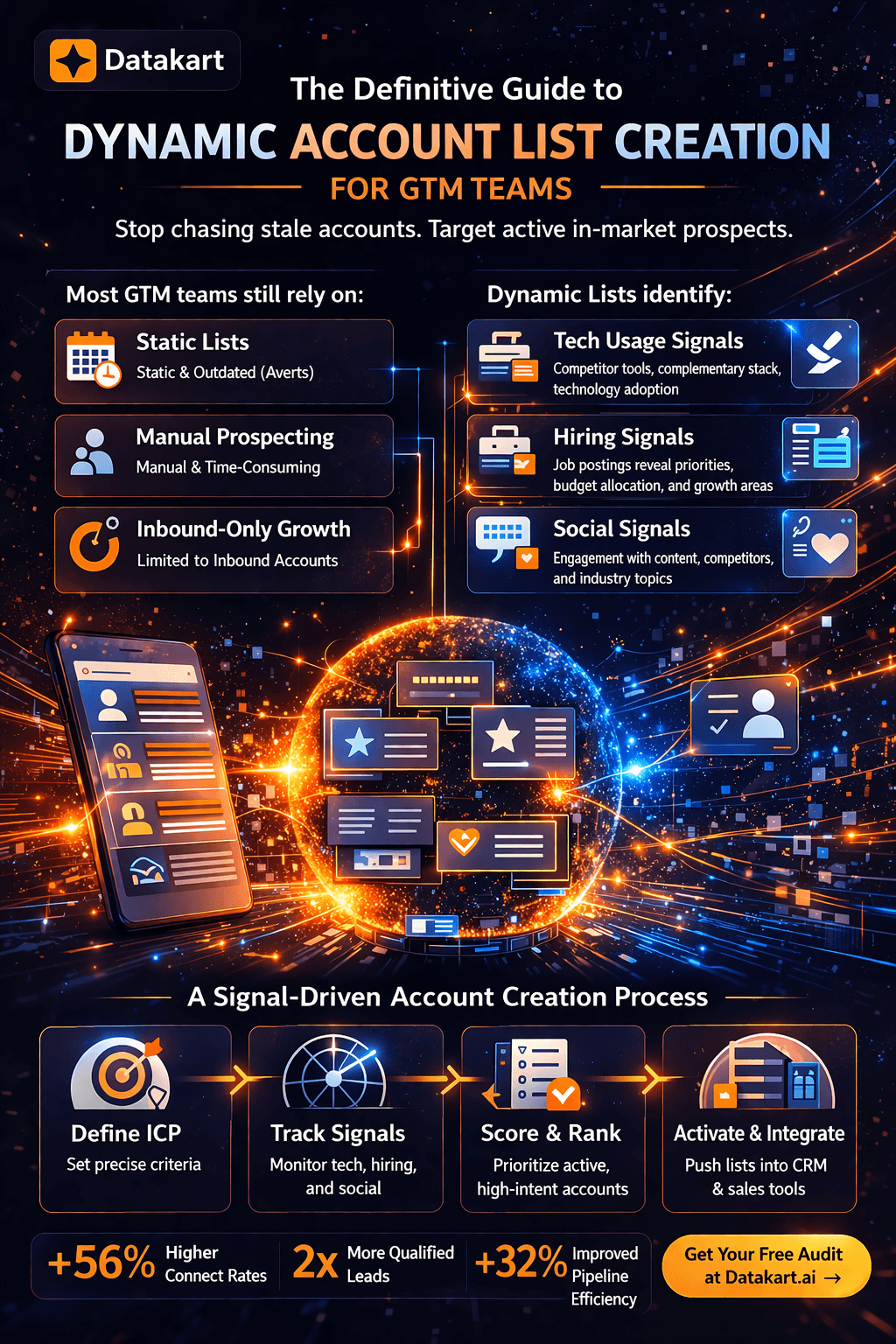
Stop wasting budget on stale data. Learn a step-by-step framework for account list creation using tech, hiring, and social signals for a high-precision GTM strategy.
March 28th, 2026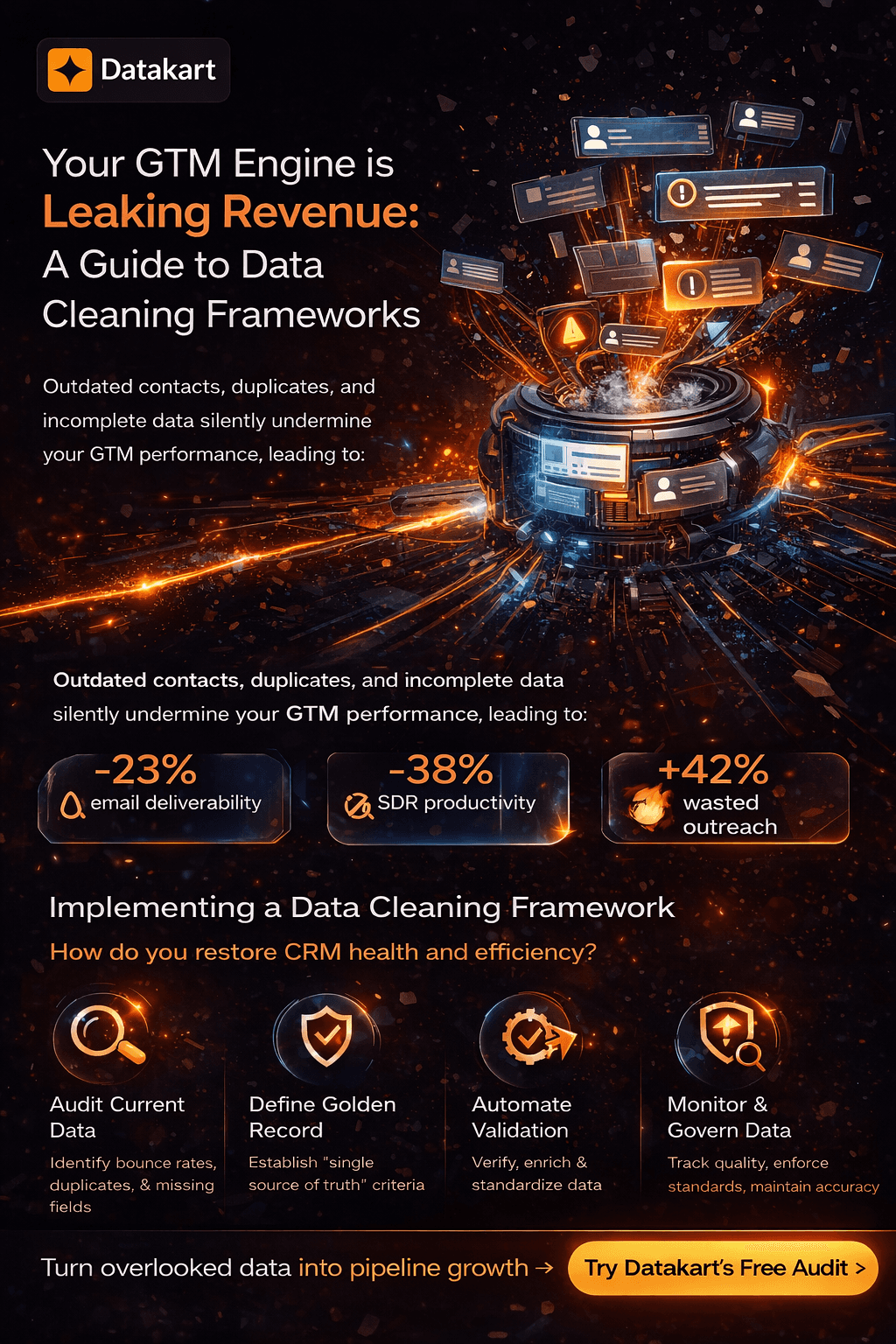
Stop losing revenue to bad data. Learn how scalable data cleaning frameworks help RevOps and GTM leaders build a reliable pipeline engine.
March 21st, 2026