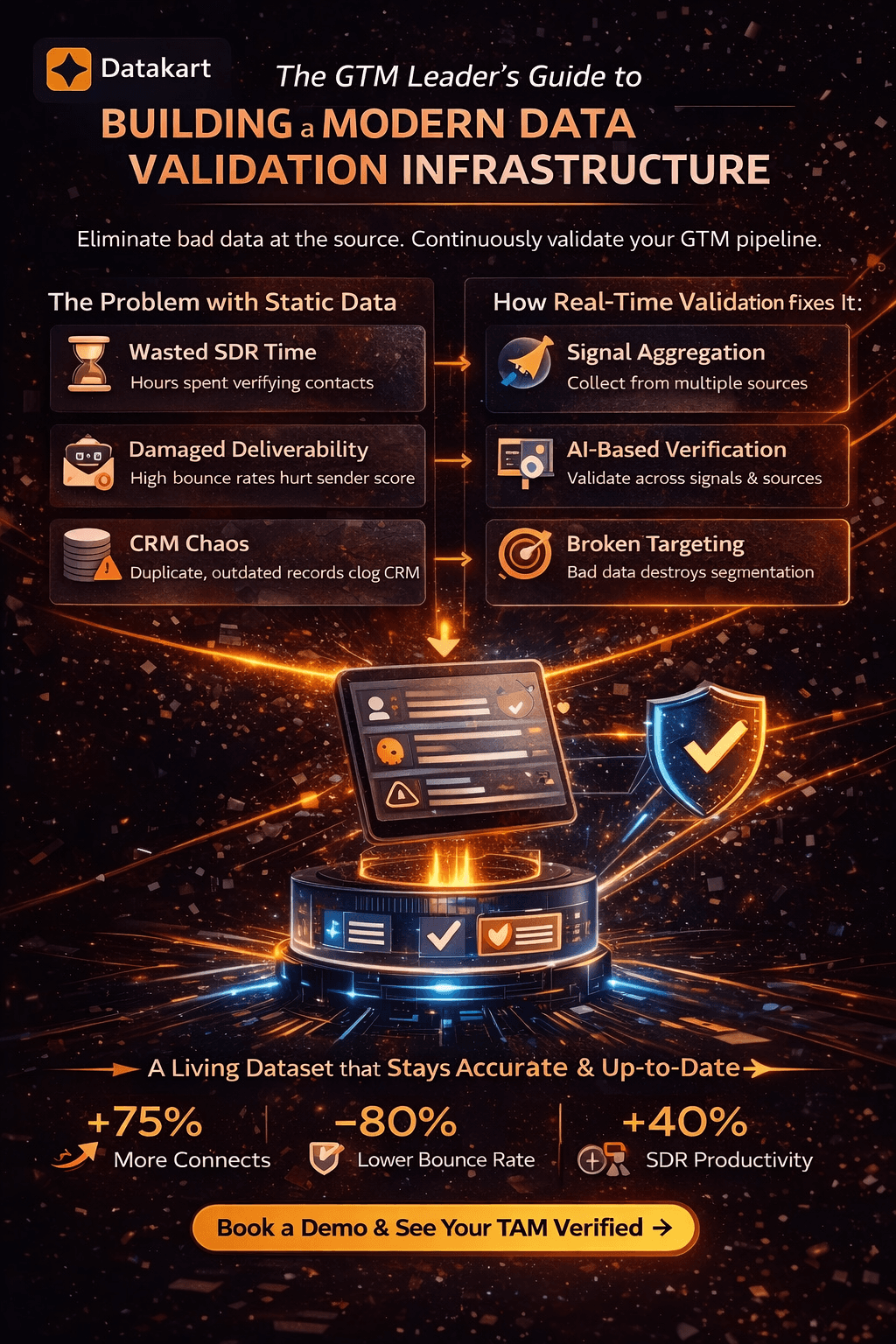
The GTM Leader's Guide to Building a Modern Data Validation Infrastructure
Build a robust data validation infrastructure. Learn to implement real-time verification logic for email and phone checks to fuel your revenue engine.
 March 28th, 2026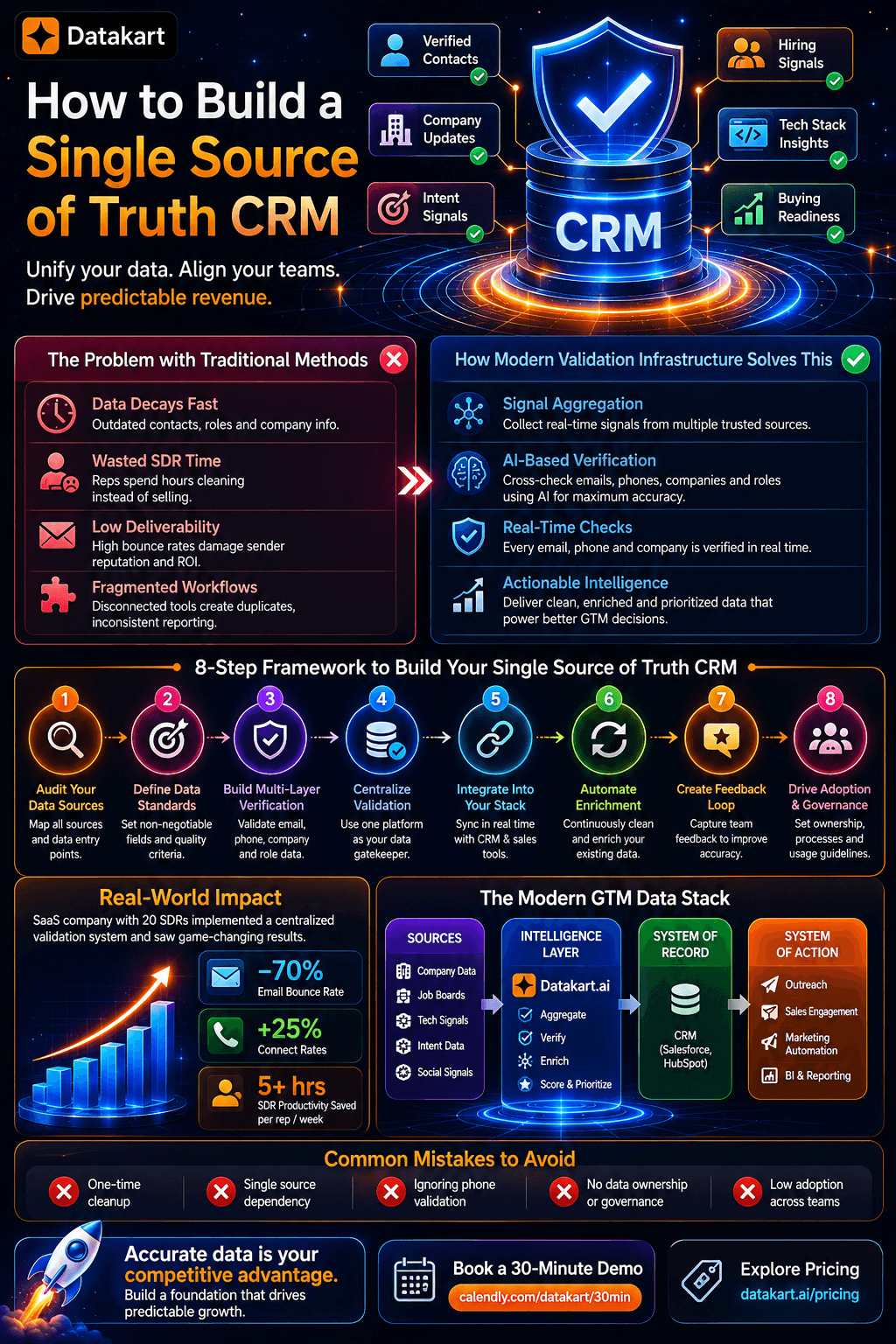
Most outbound teams are targeting the wrong accounts.
Not because the ICP is incorrect. Not because the messaging is weak. But because the timing is off.
The reality is that only a small percentage of your total addressable market is actively evaluating solutions at any given moment. Yet most GTM teams still rely on static prospect lists, generic segmentation, and broad outbound campaigns that fail to identify actual buying readiness.
In 2026, precision timing has become one of the biggest competitive advantages in B2B growth.
The companies generating efficient pipeline today are not simply targeting good-fit accounts. They are identifying in-market B2B buyers before competitors do.
This shift matters because outbound economics have changed dramatically.
Customer acquisition costs are rising. Buyers are overwhelmed with generic outreach. SDR teams are under pressure to improve efficiency while operating with leaner resources. Broad prospecting workflows no longer deliver consistent results.
Modern GTM organizations are responding by adopting AI-driven prospecting systems built around real-time intent signals, account intelligence, and dynamic enrichment.
According to Gartner, buying journeys have become increasingly nonlinear, making behavioral signals and account intelligence more important than static targeting alone.
The future of outbound belongs to teams that can identify active buying intent early.
Most prospecting systems were designed for volume, not timing.
The traditional outbound workflow usually looks like this:
This process creates a major operational problem.
Most targeted accounts are not actively evaluating solutions.
Traditional prospecting assumes that ICP fit automatically equals purchase intent.
It does not.
A company may perfectly match your firmographic criteria while having zero active buying urgency.
Without timing intelligence, outbound efficiency declines significantly.
Prospecting lists become outdated quickly.
People change roles. Teams reorganize. Budgets shift. Companies adopt new tools. Growth priorities evolve.
This creates major challenges for teams trying to identify in-market prospects using static databases.
When SDRs prospect accounts without active intent signals, they spend time on low-probability outreach.
The result is:
Outbound performance suffers when timing intelligence is missing.
Modern buyers expect relevance.
Cold outreach based solely on job titles and company size no longer stands out. Teams need contextual insight into what accounts are actively prioritizing internally.
This is why traditional outbound systems are becoming less effective.
Modern prospecting systems focus on behavioral intelligence instead of static targeting.
Rather than treating every ICP-fit account equally, AI-driven systems prioritize organizations showing measurable buying activity in real time.
Platforms like Datakart.ai help GTM teams identify in-market B2B buyers using continuously verified account intelligence and live operational signals.
These systems monitor indicators such as:
The methodology shift is significant.
Traditional prospecting focuses on who fits the ICP.
Modern AI prospecting for active buyers focuses on who is most likely to buy now.
For example, instead of targeting every mid-market SaaS company, modern workflows may prioritize:
SaaS companies actively hiring RevOps talent, expanding SDR teams, adopting new GTM software, and researching related solution categories.
This dramatically improves outbound efficiency.
AI also helps GTM teams identify account prioritization patterns faster than manual research workflows.
Instead of spending hours validating spreadsheets, teams can focus directly on high-probability accounts.
HubSpot provides additional guidance on intent-driven outbound strategies here:https://blog.hubspot.com/sales/buyer-intent
Here is a practical framework GTM teams can use to identify in-market B2B buyers more effectively.
Start by identifying behaviors that typically indicate active evaluation.
Examples include:
These operational indicators often reveal buying readiness earlier than direct inbound activity.
Do not target every account that loosely fits your market.
Focus on:
Precision improves prioritization.
Combine multiple intent indicators together.
Strong buying intent often emerges through combinations such as:
Layered signals improve targeting accuracy substantially.
Explore workflow and pricing options here:https://www.datakart.ai/pricing
Manual enrichment slows execution.
Modern AI-driven workflows automatically:
Automation improves prospecting speed and reliability.
High-performing GTM teams focus on relevance instead of massive prospect lists.
A smaller list of verified in-market accounts often outperforms broad outbound campaigns targeting thousands of low-intent prospects.
Pipeline efficiency matters more than outbound activity volume.
Marketing and SDR teams should work from the same intent framework.
Alignment should include:
This improves campaign consistency.
Buying readiness changes quickly.
Accounts that are inactive today may become high-priority next quarter.
Modern GTM workflows continuously refresh targeting based on live account movement.
Consider a hypothetical SaaS company targeting mid-market technology organizations.
Initially, the company relied on broad outbound campaigns targeting all SaaS businesses within specific employee ranges. SDR response rates remained inconsistent despite aggressive outreach volume.
The company rebuilt its prospecting system using:
Instead of targeting 8,000 accounts broadly, the team focused on 400 organizations actively showing buying indicators.
Within six months, the company achieved:
The biggest improvement came from timing accuracy.
The team stopped chasing static ICP-fit accounts and focused entirely on organizations demonstrating active operational change.
That shift transformed outbound efficiency.
Here are the most common mistakes GTM teams make when trying to identify in-market prospects:
These mistakes create inefficiency across the entire pipeline generation process.
The strongest intent-driven GTM systems combine multiple data layers into a unified workflow.
A modern outbound stack often includes:
Layer
Purpose
CRM
Centralized account tracking
Enrichment Platform
Contact and company verification
Intent Data Layer
Buyer behavior analysis
Sales Engagement Platform
Outbound automation
Analytics Layer
Pipeline measurement
AI Verification Engine
Real-time account updates
Platforms like Datakart.ai strengthen AI prospecting for active buyers by helping GTM teams continuously identify verified accounts showing live buying signals.
The goal is not simply generating more leads.
The goal is targeting the right buyers at the right moment.
Learn more here:https://www.datakart.ai/
Finding in-market B2B buyers has become one of the most important competitive advantages in modern GTM execution.
Static lists and broad outbound workflows are no longer sufficient in a market driven by timing, operational change, and buyer intent.
The companies winning in 2026 are building AI-driven prospecting systems powered by real-time signals and continuously verified account intelligence.
The future of outbound is not about reaching more accounts.
It is about identifying the accounts already moving toward a purchase decision.
Want to identify high-intent accounts faster and improve outbound precision? Book a strategy session with Datakart to see how AI-verified account intelligence can help your team find active buyers before competitors do.
To Book a demo Click here
In-market B2B buyers are companies actively evaluating solutions and showing measurable buying signals such as hiring activity, technology adoption, or operational expansion.
Companies identify in-market prospects using real-time buyer intent signals, AI-driven enrichment, hiring data, funding activity, and behavioral account intelligence.
Real-time buyer intent signals are operational or behavioral indicators that suggest a company may be actively researching or preparing to purchase a solution.
AI prospecting systems analyze dynamic account signals, verify data continuously, and prioritize accounts showing the highest probability of active buying intent.
Timing is critical because even strong ICP-fit accounts may not be actively evaluating solutions. Identifying accounts during active buying windows improves response rates and pipeline efficiency.
Build a robust data validation infrastructure. Learn to implement real-time verification logic for email and phone checks to fuel your revenue engine.
March 28th, 2026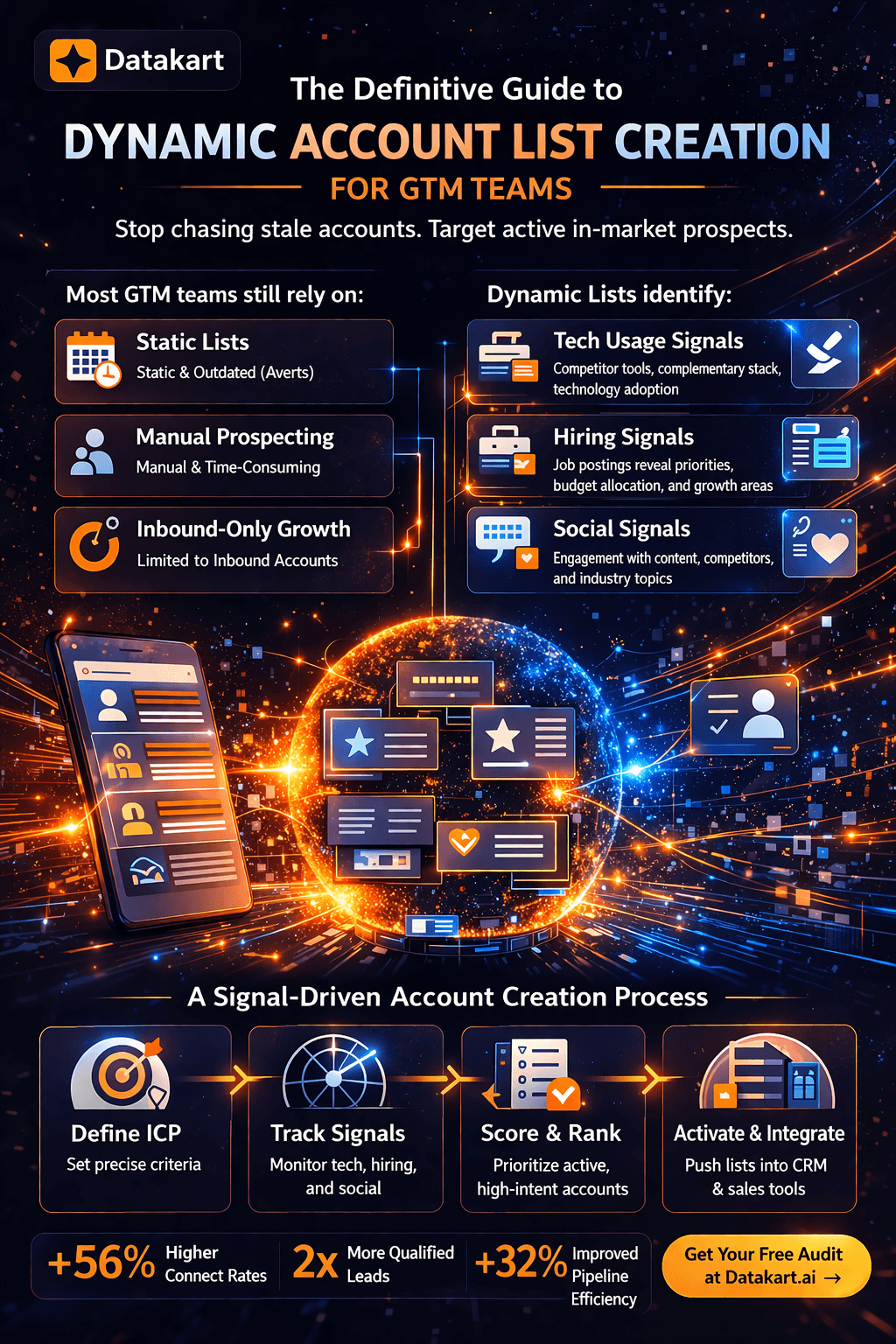
Stop wasting budget on stale data. Learn a step-by-step framework for account list creation using tech, hiring, and social signals for a high-precision GTM strategy.
March 28th, 2026
Stop losing revenue to bad data. Learn how scalable data cleaning frameworks help RevOps and GTM leaders build a reliable pipeline engine.
March 21st, 2026