
Lead Enrichment Tools in 2025, Comparing the Top Platforms and Metrics That Matter
Build a reliable pipeline with real-time enrichment, validated data, and actionable buyer intent signals.
 October 2nd, 2025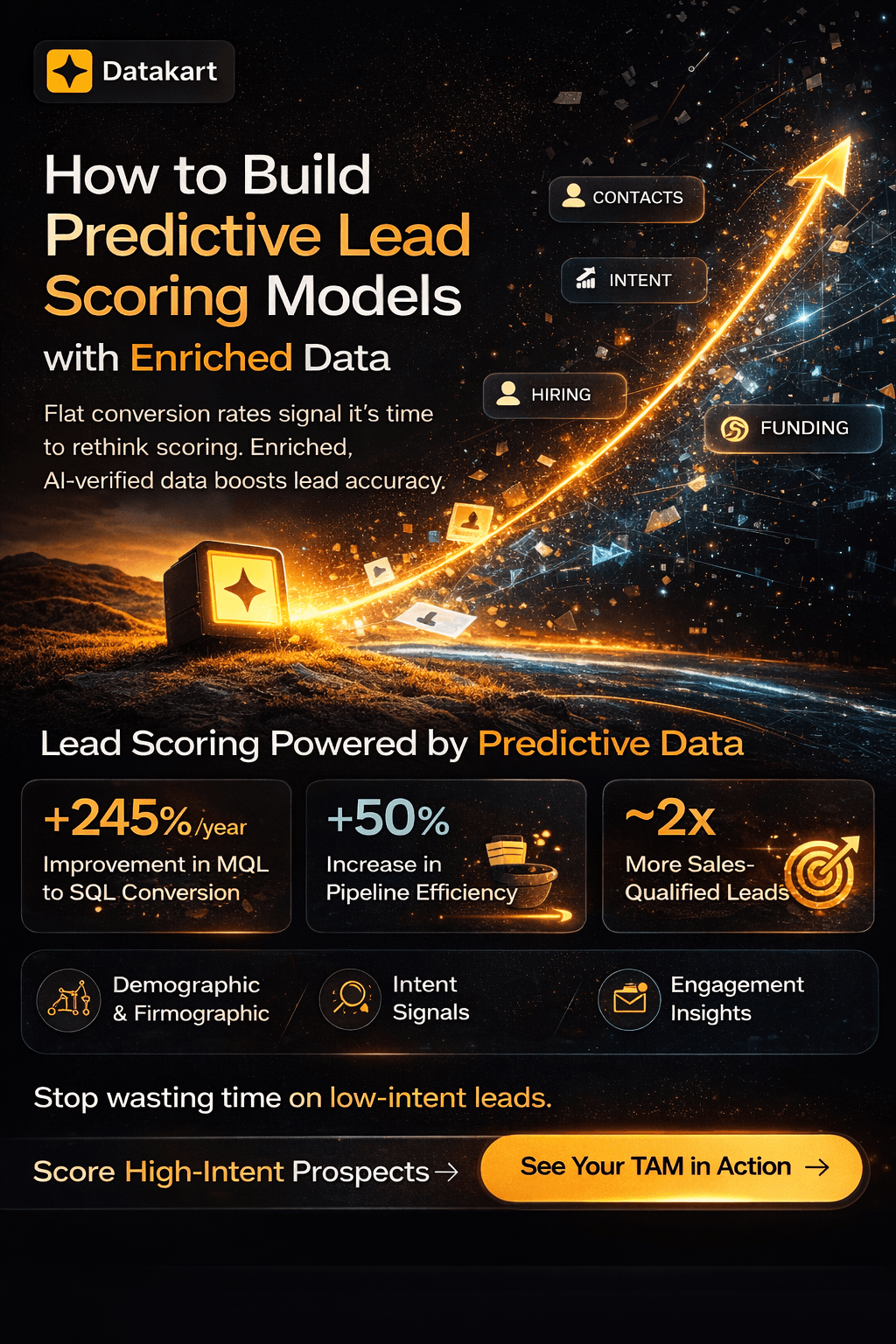
Tired of lead scoring models that fail? Learn how enriched, AI-verified data improves demographic and behavioral scoring to drive higher conversions.
Your MQL-to-SQL conversion rate is flatlining. Despite a steady flow of leads, your sales team spends time on conversations that fail to convert. This isn’t a sales problem or a marketing problem, it’s a data problem.
Most traditional lead scoring models are built on incomplete, outdated, and static data. They rely on surface-level signals and ignore the deeper context behind buying intent.
In today’s competitive market, generating more leads is not the goal. Generating the right leads is what drives revenue. This requires moving beyond reactive scoring models and adopting a predictive approach powered by enriched, AI-verified data.
When done correctly, lead scoring becomes a system that identifies genuine buying intent rather than simply tracking engagement.
For years, lead scoring has been built around assigning points to actions such as e-book downloads or webinar registrations.
This model lacks context and produces unreliable results.
Rapid Data Decay
B2B data changes constantly. Contacts switch roles, companies restructure, and records quickly become outdated. According to HubSpot’s research on data decay, a significant portion of B2B data becomes inaccurate each year.
When scoring models rely on outdated CRM records, they introduce significant error into qualification processes.
Incomplete Lead Profiles
Form submissions capture only a small fraction of useful information. Without enrichment, key details such as company size, revenue, and technology stack remain missing.
This weakens demographic scoring and leads to poor targeting.
One-Dimensional behavioral Signals
Traditional behavioral scoring assigns equal weight to all actions, regardless of who performs them. A junior researcher and a senior decision-maker may receive the same score for similar activities.
This lack of context floods pipelines with low-quality leads.
Lack of Intent Signals
Website activity alone does not indicate purchase intent. Prospects may be researching, comparing competitors, or simply exploring.
Without third-party intent data, lead scoring models fail to identify real buying signals.
Modern lead scoring models rely on enriched, continuously updated data rather than static CRM records.
Platforms like Datakart’s GTM intelligence platform provide real-time data enrichment and verification, enabling more accurate scoring.
This approach improves lead scoring in three key ways.
Comprehensive Data Profiles
Enrichment fills gaps in CRM records by adding verified job titles, seniority levels, company size, revenue data, and technology usage.
This strengthens demographic and firmographic scoring.
Dynamic Data Updates
Instead of relying on static records, enriched data platforms continuously update contact and company information.
This ensures scoring models operate on current, accurate data.
Predictive Intent Signals
By incorporating third-party intent data, teams can identify accounts actively researching relevant solutions.
This shifts lead scoring from reactive tracking to predictive prioritization.
Creating an effective scoring model requires a structured approach focused on data quality and alignment.
The process begins with defining a precise Ideal Customer Profile. Instead of relying on basic firmographics, high-performing teams incorporate technology usage, hiring patterns, and growth signals to identify ideal prospects.
Once the ICP is defined, the next step is cleaning and standardizing CRM data. Duplicate records, inconsistent job titles, and outdated contacts must be addressed before building any scoring model.
With clean data in place, organizations layer demographic and firmographic scoring. Leads that closely match the ICP receive higher scores, while non-target segments are deprioritized.
behavioral scoring is then applied with context. Engagement signals such as pricing page visits or content downloads are weighted differently depending on the lead’s fit.
CTA: Want to see your TAM in action? Try Datakart’s Free Audit.
The next layer involves incorporating intent signals. Accounts actively researching relevant solutions receive higher scores, allowing sales teams to prioritize outreach based on timing.
Finally, organizations define scoring thresholds for lead qualification and automate handoffs between marketing and sales. Continuous monitoring ensures the model evolves based on real conversion data.
Consider a mid-market SaaS company struggling with lead quality.
Their lead scoring model relied entirely on behavioral signals such as content downloads and webinar attendance. While lead volume remained high, conversion rates were low.
After adopting enriched data, the company restructured its scoring model.
Verified job titles, company size, and industry data were added to every lead profile. Engagement signals were weighted based on lead fit, and intent data was incorporated to identify in-market accounts.
The results were significant.
Lead volume decreased slightly, but quality improved dramatically. Sales teams focused only on high-confidence leads, resulting in stronger engagement and faster deal progression.
Within two quarters, conversion rates increased substantially, and pipeline efficiency improved across the board.
When building predictive lead scoring models, several common mistakes reduce effectiveness.
Failing to align scoring criteria with sales teams often leads to poor adoption. If sales does not trust the model, it will not be used.
Ignoring negative scoring can also distort results. Leads that are clearly unqualified should be actively deprioritized.
Overcomplicating the model too early creates unnecessary complexity. Starting with a focused set of high-impact signals produces better results.
Relying on outdated data remains the most critical mistake. Even the best scoring logic fails when built on inaccurate information.
A modern lead scoring model requires an integrated technology stack.
CRM platforms such as Salesforce or HubSpot act as the system of record for contact and pipeline data.
Marketing automation platforms execute scoring rules and manage lead lifecycle processes.
The most critical layer is the data intelligence platform.
Solutions like Datakart’s data enrichment platform continuously verify and enrich contact and company data, ensuring scoring models operate on accurate information.
Teams evaluating data enrichment solutions often explore Datakart’s pricing and enrichment plans to understand how real-time data integrates with their GTM stack.
Traditional lead scoring models are no longer sufficient for modern GTM strategies.
To identify high-quality leads, organizations must move beyond basic behavioral scoring and adopt a predictive model powered by enriched data.
By combining demographic fit, behavioral engagement, and intent signals, teams can prioritize leads with genuine buying potential.
Accurate data transforms lead scoring from a simple tracking mechanism into a powerful revenue driver.
Ready to improve your lead scoring accuracy?
Discover how enriched, AI-verified data can help your team identify high-intent buyers faster. Book a free data audit with Datakart and see how predictive scoring can transform your pipeline.
What is the difference between behavioral and demographic scoring?
Behavioral scoring tracks how leads interact with your brand, while demographic scoring evaluates who the lead is based on attributes such as role, company size, and industry.
How do you build a predictive lead scoring model?
Start by defining your ICP, clean your CRM data, apply demographic and behavioral scoring, incorporate intent signals, and continuously refine the model based on conversion outcomes.
Why is intent data important in lead scoring?
Intent data reveals which accounts are actively researching relevant solutions, allowing teams to prioritize outreach based on real buying signals.
How often should lead scoring models be updated?
Lead scoring models should be reviewed regularly, typically on a quarterly basis, to ensure alignment with evolving market conditions and sales outcomes.
Build a reliable pipeline with real-time enrichment, validated data, and actionable buyer intent signals.
October 2nd, 2025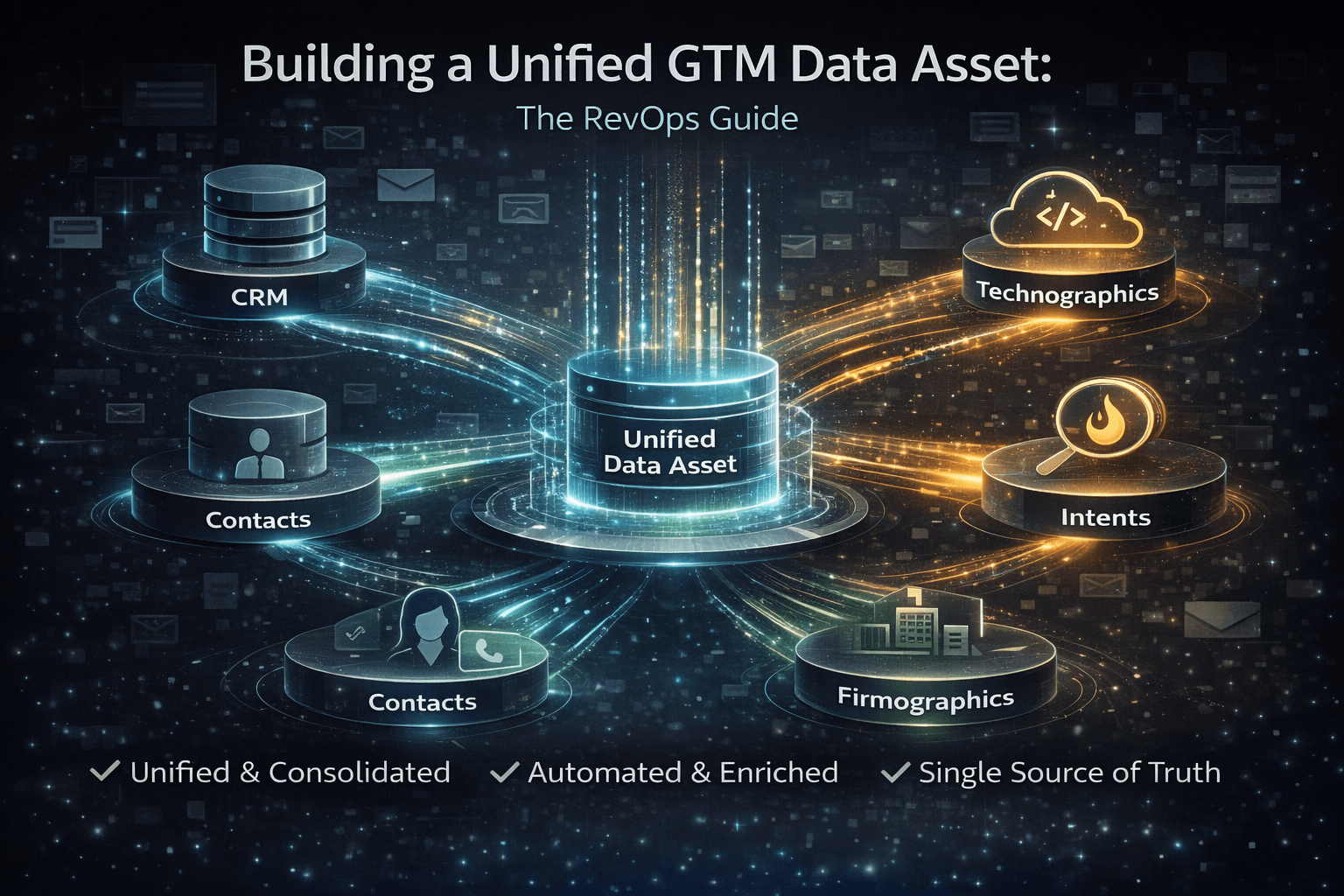
Stop struggling with data silos. Learn how to create a unified data asset by merging databases and automating your enrichment stack for better GTM.
January 20th, 2026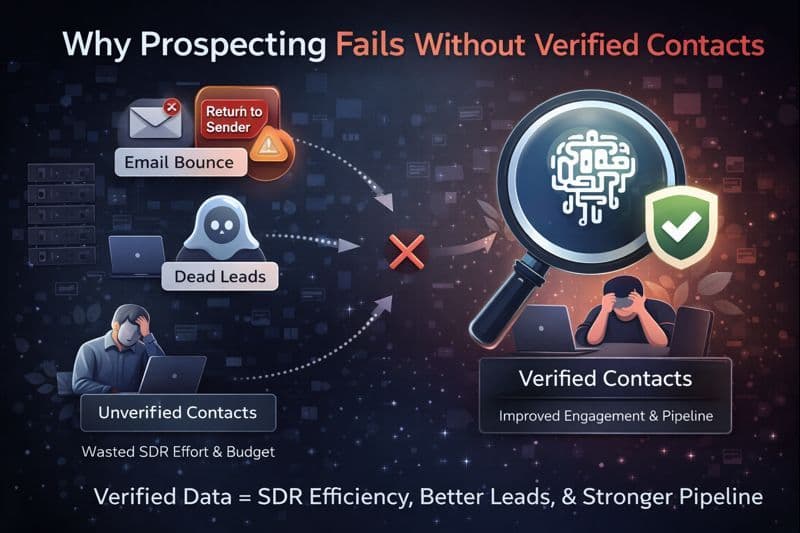
Stop wasting resources on dead leads. Discover how verified contacts improve SDR efficiency, outbound performance, and lead quality for B2B GTM teams.
January 20th, 2026